Queer Places:
University of Cambridge, 4 Mill Ln, Cambridge CB2 1RZ
88 Sandgate Rd, Folkestone CT20 2AA, UK
Cheriton Road Cemetery, Cheriton Rd, Folkestone CT20 1DF, United Kingdom
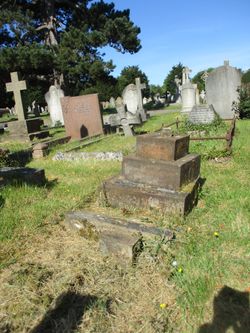 Richard Dillon Boylan (1804 – April 16, 1902) was born in 1804 in Stillorgan, County Dublin, Ireland, the son of John Boylan, and spent his early years moving through elite
educational and social circles before experiencing a protracted descent into financial and personal precarity. He received his foundational schooling at Oscott School in
Warwickshire under Mr. Potts before entering Trinity College, Dublin, as a pensioner on March 30, 1822, at the age of eighteen. During his broader educational and early
professional trajectory, he maintained intellectual affiliations, including membership among the Cambridge Apostles, an elite
and intellectually rigorous university conversational society. Continuing his preparation for a legal career, Boylan was admitted to the Middle Temple on June 9, 1826,
eventually qualifying as a British barrister, though he would spend much of his later life listed as not in active practice.
Richard Dillon Boylan (1804 – April 16, 1902) was born in 1804 in Stillorgan, County Dublin, Ireland, the son of John Boylan, and spent his early years moving through elite
educational and social circles before experiencing a protracted descent into financial and personal precarity. He received his foundational schooling at Oscott School in
Warwickshire under Mr. Potts before entering Trinity College, Dublin, as a pensioner on March 30, 1822, at the age of eighteen. During his broader educational and early
professional trajectory, he maintained intellectual affiliations, including membership among the Cambridge Apostles, an elite
and intellectually rigorous university conversational society. Continuing his preparation for a legal career, Boylan was admitted to the Middle Temple on June 9, 1826,
eventually qualifying as a British barrister, though he would spend much of his later life listed as not in active practice.
Boylan's personal life involved multiple marriages and notable domestic shifts. He was first married on October 20, 1840, at Kilquade in County Wicklow to Anne Orr, with
whom he had at least one daughter, Laura. Following the shifts of mid-century life, records indicate subsequent financial challenges, highlighted by an appearance in Perry's
Bankrupt and Insolvent Gazette in November 1858 listing him as out of business while residing in the Old Kent Road area. By the time of the 1871 census, Boylan was residing
as a boarder in Folkestone at Royal Terrace on The Lees, widowed and noted as a non-practicing barrister. Later in that decade, at the age of seventy-two, he contracted a
second marriage in 1877 to Harriet Munk.
His later years were marked by increasing poverty, legal troubles, and severe accidents. In late 1876 and early 1877, Boylan became the subject of public fascination and
court reporting when he was tried and convicted at the Westminster Police Court for the theft of various articles belonging to Captain Stacpoole, an Irish Member of
Parliament, at Cupola House in Chelsea. During the proceedings, Boylan delivered a lengthy harangue detailing his former social standing, asserting that he had previously
been presented to Queen Victoria and Prince Albert by the Lord Lieutenant during the royal visit to Dublin, and presenting testimonials from high-ranking figures. Pleading
his age, poverty, and infirmities, he was given a mitigated sentence involving fines and a brief imprisonment after the complainant declined to heavily press the felony
charge. His physical vulnerabilities were further compounded in June 1883 when, at the age of seventy-nine, he was admitted to St. Thomas's Hospital after being knocked down
by a horse with the wheel of a hansom cab passing over him.
Boylan passed away on April 16, 1888, at his residence at 88 Sandgate Road in Folkestone, Kent, at the age of eighty-three. His death was registered in Elham, and he was
laid to rest on April 21, 1888, in Section A of the Cheriton Road Cemetery (Magdalen Hill/Folkestone Cemetery). Probate of his will was granted on June 2, 1888, to his widow
and sole executrix, Harriet Dillon-Boylan, with his personal estate valued at a modest £222 14s. 11d. While his membership in the Cambridge Apostles places him within a
nineteenth-century intellectual network that frequently fostered intense homosocial bonds, romantic male friendships, and homoerotic literary subcultures among elite
Victorian youth, surviving historical documentation for Boylan specifically centers primarily on his conventional marriages, financial insolvency, legal altercations, and
downward social mobility rather than documented same-sex partnerships or explicit queer advocacy.
References:
Other references:
- Alumni Dublinenses / Cambridge University Records: Admission records for Trinity College (admitted pensioner, March 30, 1822, aged 18, son of John Boylan, born in Stillorgan, Co. Dublin).
- Middle Temple Admission Registers: Admission record dated June 9, 1826, documenting his entry to the bar.
- Wikisource: Biographical notes identifying Richard Dillon Boylan (circa 1804–1888) as a British writer and translator.
- Catholic Parish Registers, National Library of Ireland: Marriage record for Richard Dillon Boylan and Anne Orr, married October 20, 1840, in Kilquade, County Wicklow (Diocese of Dublin).
- Reports of the Deputy Keeper of the Public Records and Keeper of the State Papers in Ireland: Marriage licence documentation listing Richard Dillon Boylan and Anne Orr (1840).
- 1871 England Census: Enumeration for Folkestone, Kent (Civil Parish: Folkestone, Registration District: Elham), listing Richard D. Boylan as a 66-year-old widowed boarder and non-practicing barrister-at-law born in Ireland.
- 1881 England Census: Enumeration for Brighton, Sussex, recording him at age 75, married, and working as a non-practicing barrister boarding at Devonshire House.
- Civil Death Registration: General Register Office (GRO) Death Index for England and Wales, registered in Elham, June Quarter 1888, volume 2a, page 560, noting his age at death as 83.
- Magdalen Hill / Cheriton Road Cemetery Burial Registers (Folkestone, Kent): Burial records for Richard Dillon Boylan, who died April 16, 1888, at 88 Sandgate Road, Folkestone, and was buried on April 21, 1888 (Section A, Grave Number 2713, Interment Number 2130).
- Calendar of the Grants of Probate and Letters of Administration (England and Wales): Probate entry dated June 2, 1888, proving the will to his widow and sole executrix, Harriet Dillon-Boylan, with a personal estate valued at £222 14s. 11d.
- Perry's Bankrupt and Insolvent Gazette (London): Issue dated November 20, 1858 (pages 933–934, Issue 1598), listing Richard Dillin Boylan as "out of business," residing at Windsor Grove, Old Kent Road.
- The Belfast News-Letter & Birmingham Daily Post: Court and fashion reporting from January 1877 detailing the police court examination regarding the theft at Cupola House, Carlyle Square, Chelsea, involving Captain Stacpoole, M.P.
- Reynolds's Newspaper (London): Issue dated June 10, 1883 (Issue 1713), recording his admission to St. Thomas's Hospital at age 79 following a street accident involving a hansom cab.
Support this project
This website is a passion project researched, developed, and funded entirely by me. If you find the content valuable and would like to help support the ongoing research and hosting costs, any contribution is deeply appreciated.
Thank you for keeping this independent resource alive!
My books on Amazon: Elisa Rolle's books
BACK TO HOME PAGE
